Today, January 23rd, 2026 is HANDWRITING DAY
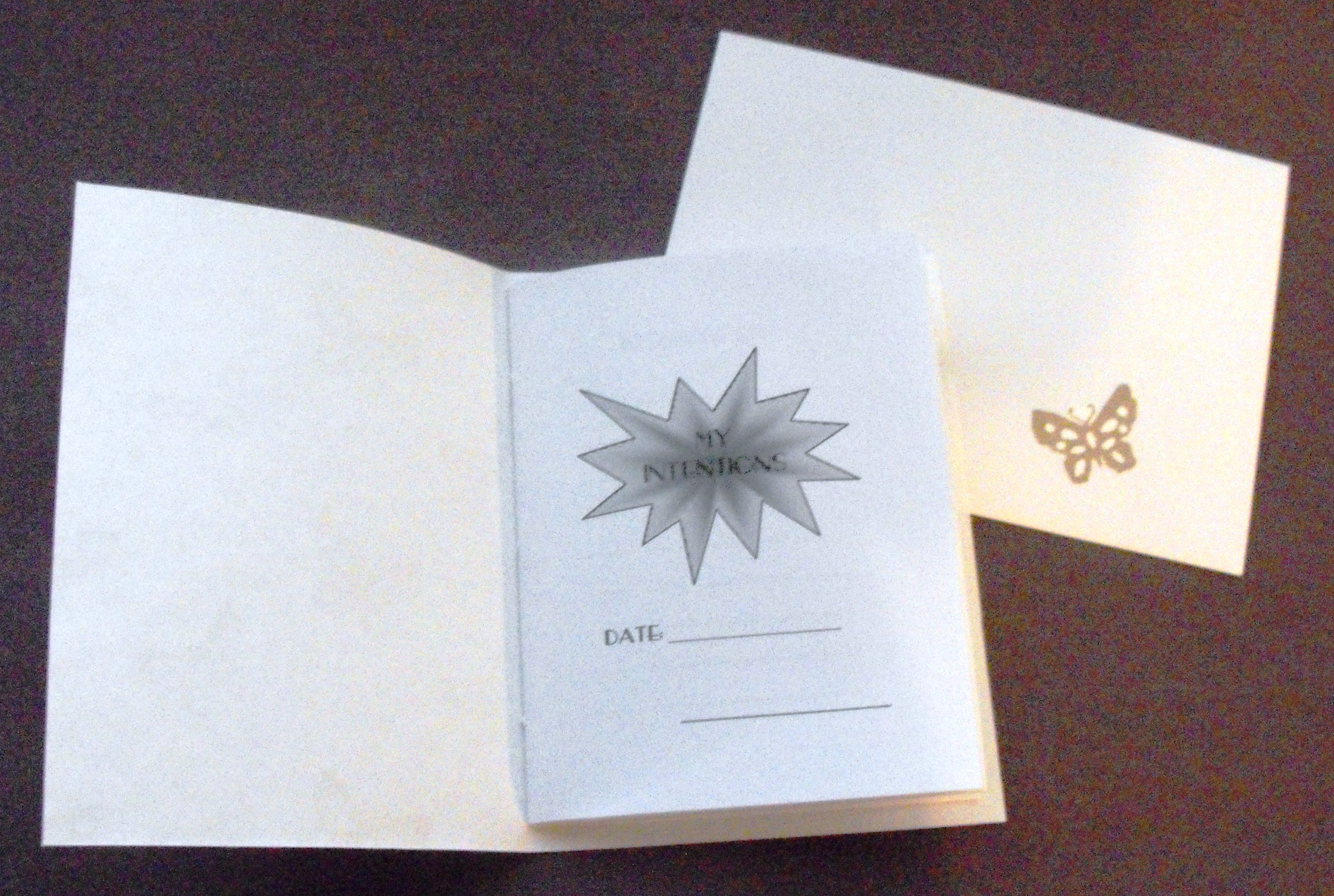
Paper Architect began with handmade writing journals then expanded to formatted logs and journals for specific uses. In my introduction post I write about why Paper Architect was created and the philosophy behind it.
I am a big fan of handwriting for so many reasons.
When you hand write something you are more likely to remember it, it's a scientific fact.
Writing pen to paper is essential when you have a great thought that needs immediate attention before it fades away.
Handwriting is valuable. Your signature is yours alone. People pay good money for a celebrity's autograph. It's needed to sign important documents and on identification cards.
I could go on about the merits of handwriting but I will stop here and instead share a fantastic article about people who still hand write their 'to do' lists and their personality traits. Makes me glad I'm one of them.
Maybe you are one of them too. If so, then this article will validate how important your handwriting can be.
Enjoy!

People Who Still Handwrite Lists Have These Personality Traits
Danielle Sachs; Thu, January 22, 2026 at 2:15 AM PST 8 min read
In an age of reminder apps, digital calendars, and AI assistants that can manage your entire schedule, there's still a stubborn tribe of people who reach for a pen and paper. They jot grocery items on the back of envelopes, keep spiral notebooks full of crossed-off tasks, and feel genuinely unsettled when they can't find something to write with. It might look old-fashioned, but here's what that habit actually reveals.
1. They Like Feeling In Control
There's something about physically writing things down that makes things feel manageable. For handwritten list-makers, the act of putting pen to paper isn't just about remembering—it's about taking ownership of what's swirling around in their head. They're not outsourcing their mental load to an app that might glitch or a phone that could die. They're holding it in their own hands, literally.
This need for control is about preferring to be the one steering the ship. These people don't like feeling at the mercy of technology or circumstances. They'd rather have a system that depends on nothing but themselves and a working pen.
2. They're Deep Processors
Handwritten list-makers tend to be people who think things through rather than rushing past them. A 2024 study from the Norwegian University of Science and Technology found that when people write by hand, their brains show far more connectivity across regions involved in memory, movement, and sensory processing than when they type. The physical act of forming letters engages the brain in a way that pressing identical keys cannot—and the people drawn to handwriting seem to intuitively understand this.
These people want to actually absorb what's in front of them, not just get through it. Handwriting is slower, and they're okay with that, because depth matters more to them than speed.
3. They're Honest About Their Own Limits
Handwritten list-makers have made peace with the limits of their own memory. They know that the brilliant idea they had at 2 AM will evaporate by morning if they don't capture it. They've learned, probably through painful experience, that "I'll definitely remember this" is almost always a lie.
They understand how their minds work and have built a system to compensate for the gaps. The notebook isn't a crutch; it's a partnership with their own fallibility. They'd rather be prepared.
4. They Can't Stand Loose Ends
There's a well-known phenomenon in psychology called the Zeigarnik effect, which describes how incomplete tasks occupy more mental space than finished ones. Psychologist Bluma Zeigarnik first noticed it in the 1920s when she observed that waiters could remember complex orders perfectly—until the bill was paid, at which point the details vanished. Later research by Baumeister and Masicampo showed that simply making a plan for unfinished tasks can release this mental tension, which explains why writing things down feels so relieving.
For handwritten list-makers, that nagging feeling of incompleteness is particularly acute. They're the type who lie awake thinking about the email they forgot to send. Writing tasks down is how they quiet that noise.
5. They Learn By Doing
People who handwrite lists often don't even need to look at the list again—the act of writing was enough. A study published in Frontiers in Psychology found that students who took handwritten notes showed better conceptual understanding than those who typed, even when controlling for typing speed. Because writing is slower, you can't just transcribe mindlessly—you have to engage.
This reflects a broader trait: these are kinesthetic learners, people who understand things better when their bodies are involved. They're the ones who gesture while they talk, doodle while they think, and remember where something was on a page after they've forgotten the words.
6. They're Big-Picture Thinkers
There's something about a physical page that lets you take everything in at a glance. No scrolling, no tapping between screens, no wondering if there's more hidden below the fold. Handwritten list-makers want to see the whole landscape of what they're dealing with, spread out in front of them.
This visual thinking style means they process information spatially. They might group related tasks together, draw arrows between connected items, or organize their list in ways that would be clunky or impossible in a digital format.
7. They're Motivated By Tangible Progress
There's a small but real hit of satisfaction that comes from drawing a line through a completed task. Research on motivation suggests that visible progress is one of the most powerful drivers of continued effort. The physical act of crossing off—that satisfying scratch of pen through ink—provides sensory confirmation that something has been accomplished. Behavioral scientists call this "implementation intention reinforcement," but regular people just call it feeling good about getting stuff done.
These are people who need to see evidence of their own momentum. Abstract accomplishments don't land the same way for them. They want proof they can hold in their hands, and a page full of crossed-off items delivers exactly that.
8. They're Skeptical Of Dependence
It's not that handwritten list-makers are technophobes—many of them use plenty of technology in other areas of their lives. But when it comes to keeping track of what matters, they've learned not to depend on devices that can crash, lose charge, require updates, or simply malfunction at the worst possible moment.
This reflects a deeper self-reliance. They're the type who keep cash in their wallet even though they have cards, who know how to read a paper map, who don't like feeling helpless when systems fail. Paper doesn't need a password, and that matters to them more.
9. They're Pretty Disciplined
People sometimes assume that handwritten list-makers are behind the times or resistant to efficiency. But studies on personality and productivity suggest the opposite. Research has linked habitual list-making to higher levels of conscientiousness—the personality trait associated with being organized, reliable, and goal-directed. Handwritten list-makers aren't disorganized people clinging to outdated methods; they're often among the most systematic people around.
Their organization just doesn't look like everyone else's. Instead of color-coded digital calendars, they have well-worn notebooks. Instead of notification systems, they have morning rituals.
10. They Find Comfort In Routine
The act of making the list is as important as having it. There's something grounding about sitting down with paper and pen, reviewing what's ahead, and physically engaging with the day's priorities. It becomes a moment of intentionality in a world that's constantly trying to scatter their attention.
These are ritual people. They often make their lists at the same time each day—first thing in the morning, or the night before, or during a quiet moment with coffee. The habit itself creates a sense of stability, regardless of how chaotic everything else might be.
11. They Cope By Externalizing
When things feel overwhelming, they don't just think harder—they write. Getting the swirling concerns onto paper creates a sense of containment. What felt infinite and unmanageable in their head becomes finite and concrete on the page. Here are the actual things. Here's what's actually on the plate.
This is how they process stress. By transferring anxiety from mind to paper, they create distance from the worry. The problem is still there, but now it's over there, on the list, instead of everywhere at once inside their skull.
12. They're Long-Term Thinkers
They tend to think in terms of patterns and progress over time. Many of them keep old notebooks, not out of hoarding instincts, but because those records tell a story. They can flip back and see what they were working on six months ago, notice recurring tasks that might need a different solution, and track how their priorities have shifted.
This long-term orientation means they're not just managing today—they're building something. They're the type who play the long game in other areas too, saving for the future, maintaining relationships over decades, thinking about where they want to be in five years rather than just next week.
13. They Value Substance Over Speed
In a world obsessed with efficiency, choosing to handwrite anything is a small act of rebellion. It takes longer. It requires more effort. And handwritten list-makers are fine with that, because they've discovered that the slowness is part of the point. The extra time creates space for thinking. The physical effort creates engagement.
These are people who've learned that not everything worth doing should be optimized. They're the ones who still cook from scratch sometimes, who prefer long conversations to quick texts, who understand that the inefficient path is sometimes the one that actually works.
https://www.yahoo.com/lifestyle/articles/people-still-handwrite-lists-personality-101547987.html